
How do we make play possible?
Rethinking the physical learning space.

Thank you, readers, and especially our crew of supporting subscribers who make this publication possible, for sticking with us this month as I have been traveling with my family. I have been researching and soaking up as much inspiration as possible for Art is Play and other facets of our work, while trying to get my own creative energy to shift into high gear. I have also been thinking a lot about how the physical environment, any physical environment, makes play possible.
As I shared in our last post, I noticed that the playful environments or experiences we happened upon in the first part of our trip shared these 4 qualities: opportunity for critical mass or a chance to join in something bigger, opportunity for connection, opportunity for creativity, and opportunity for collecting. Today, I thought we could explore making play possible in less than playful environments. What if we applied these qualities to spaces that feel devoid of play or where play gets stuck easily? What if we put these qualities at the top of our classroom design brainstorms? What if we thought about these qualities as jumping-off points for the spaces we share in our homes with children?
Note: If you’re still (rightfully) in blissful summer mode, just save this article for later. But if your wheels are already turning and you have high hopes of reimagining a space for the upcoming school year or you’re wondering if play is possible in your context, keep reading!
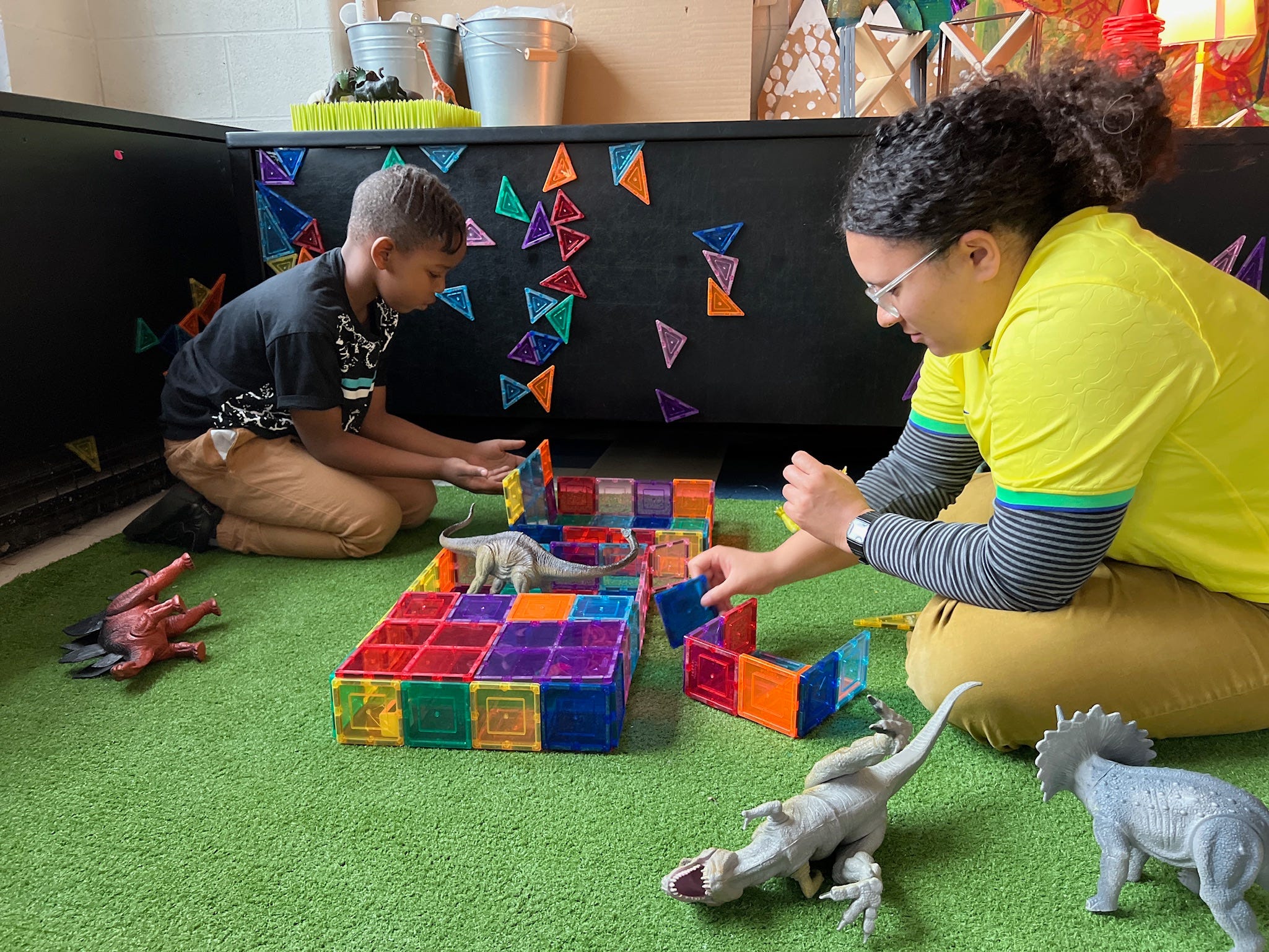
In case it isn’t already abundantly clear in our writing, we are advocates for play being possible anywhere. And when I say play, I mean experiences where children self-determine how they spend their play time—what they wish to create, how they express themselves, and which gifts and strengths they bring to the table. I have visited many schools that are devoid of play almost entirely, but other things are missing, too, such as a chunk of time long enough to think, make, and explore so that children have opportunities for choice, agency, and to find a sense of belonging. So how can we invite these qualities into a physical environment, and how can we do this work ourselves almost as a playful experiment, noticing and adjusting accordingly?
Critical mass + Connection
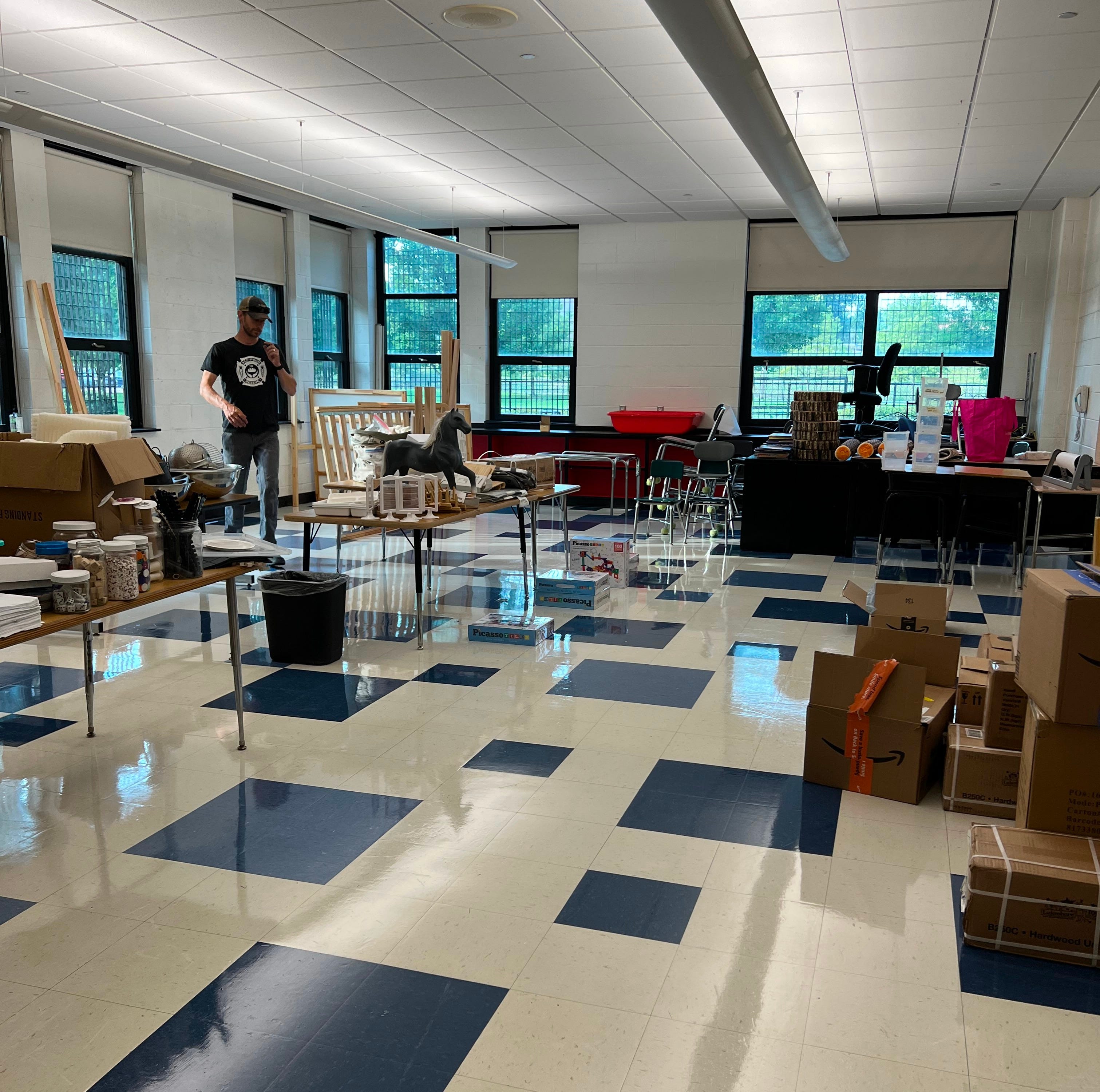
While everyone can benefit from quiet alone time, many children (and adults) crave an opportunity to be together, to feel a part of something deeply, to build on each other’s ideas, and to practice letting someone else take the lead. A few years ago, I created a Playlab space inside of a public elementary school in an unused classroom. With grant funds, we staffed it for a year, and classes came to visit as they would for other specials like art, music, or PE. Using only the furniture that was already designated for that room and some thrifted materials, the space was transformed from a traditional classroom into a hub of true play.
We created zones for different kinds of play, but invited children and compatible materials to move freely around the room. These zones allowed children to gather with each other. Makers could find recyclables and basic art materials to carry out their plans, builders could sprawl out with blocks or magnatiles on an astroturf carpet, and entrepreneurs could make bakeries and restaurants and anything else they imagined with a thrifted wooden kitchen set from the 70s. These zones allowed children to find their place and role in a group, become inspired by each other’s play, and build something real together. Busywork on Chromebooks at individual desks and behavior management systems that end up making children compete with each other do exactly the opposite. So what might it look like to carve out space for this kind of experience in a classroom?


You could try:
Expanding a high-interest area so more children can play
Getting rid of or temporarily storing superfluous furniture that is blocking the flow
Moving high-interest materials away from the wall so children can circle around them
Arranging the space to promote collaboration while also carving out space to work alone
Consider traditional furniture and fixtures in a flexible way
Creativity + Collecting
I’ve reflected on it many times, but in my experience at home, my kids are more likely to create when they know what is available and when they have an authentic aha spark of inspiration. For example, my older son outgrew his favorite pair of Crocs this month. He decided to transform the Crocs into a pair of flip-flops with scissors and duct tape. He worked for a while crafting these, refining when something didn’t work, trying them on, ripping the duct tape off, and trying again. This is a creative journey that we adults cannot meticulously plan for, manufacture, or predict what might happen. That’s why we always say, set it up and see what happens! We collect and curate and spark and invite, but at the end of the day, true creativity is a journey and one that begins with an urge to act, to think, to tinker, to make something from nothing, to transform. And when we invite creative thinking and making, we have to stay flexible, be prepared for a less-than-tidy journey, and recognize the unique approach we each possess.
How do we plan for that in a busy classroom or at home? The best advice we have is to think of yourself first. Put your oxygen mask on first! It might sound counterintuitive, but if you are stressed or worried about things being consumed too quickly or that too much of a mess will erupt, you are already roadblocking the creative journey. So, put away or get rid of anything precious or that might cause you stress if it is used or used up. Our general approach is that if children can see and reach the material, it is available.
Art materials are meant to be used, so if you have a very limited budget, choose the best ones you can find in abundance, that are free, or that can easily be replaced. Children are thrilled with cardboard, tape, paper, scissors, staplers, and markers. We’ve written lots about this here, here, and here. Less is more for younger children who are learning to manage themselves in a creative environment, but with older kids—invite them to decide what materials, how they’ll use them, what they’ll make, and if they’ll work alone or together. When children have this kind of creative autonomy, they will want to reflect and share about it; they’ll want to acquire new skills to bring ideas to reality; and they will see themselves as creators, makers, builders, thinkers—which is the whole point, right?
You could try:
Think about how children gather tools, materials, and supplies
Consider creating a simple self-serve cart or shelf
Leave some wall space completely empty so that children can add their own artworks and creations over time
Model finding magic in the mundane, wondering aloud what materials can do and become
Keep in mind that the space (classroom or home) is a shared one and design for many different kinds of users
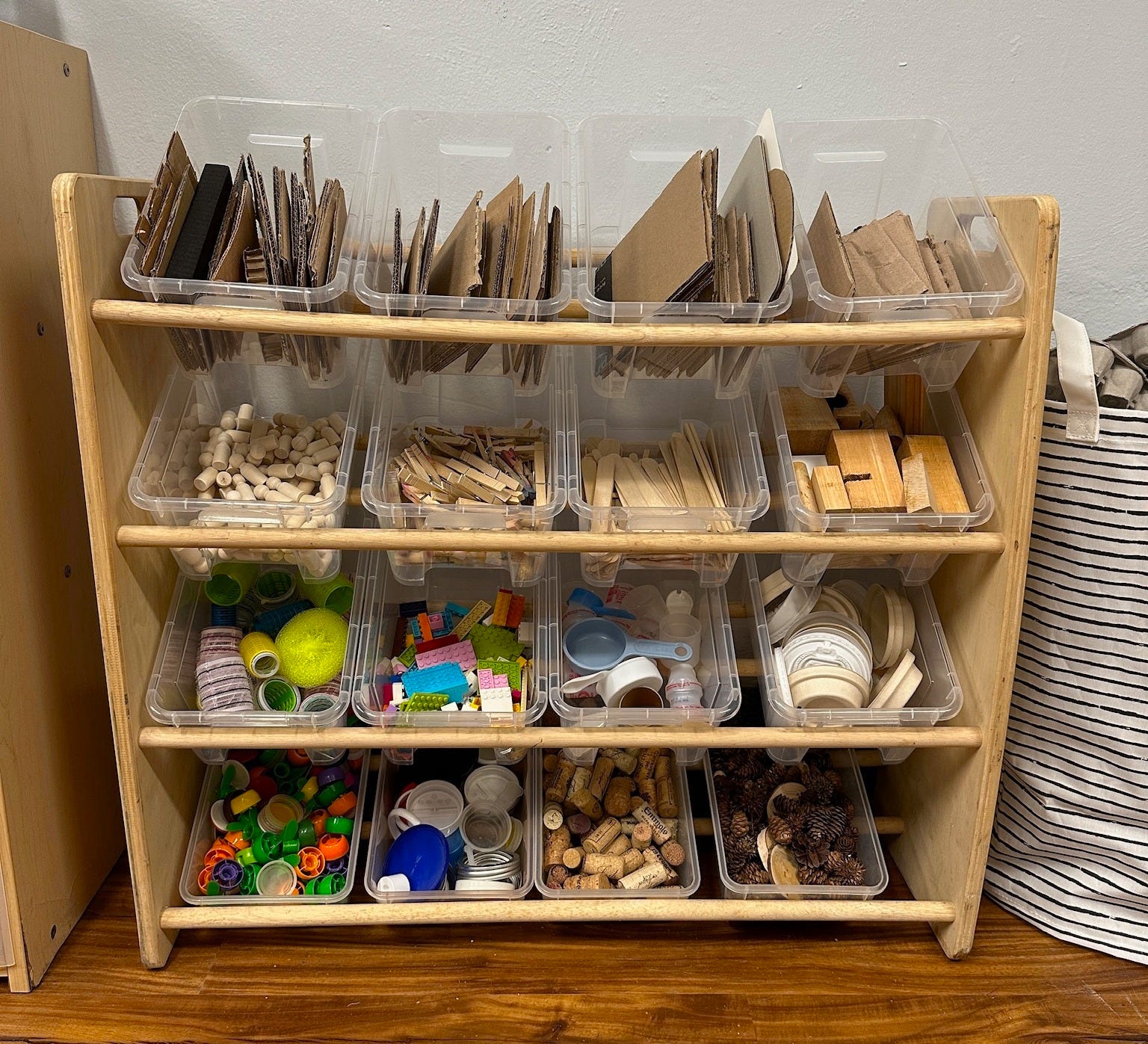
To us, designing a learning space is about creating the conditions for agency, self-motivation, and the opportunity to try and try again. The physical learning environment is an embodiment of what we value and care about. So, if we want to nurture problem solvers and thinkers and makers, small moves and playful experiments in our design of the space matter so much.
We’ll share some more about creating a play-possible physical environment this summer, as we move into back-to-school mode, but if you want to learn more right away, you can always check out our Design for Discovery workshop. In this workshop, we invite educators to begin with two essential questions: How do we want this space to feel? and What do we want it to communicate to the children who spend their days here?
Do you just want a little space design boost right now? We’ve added a bonus PDF below just for our paid subscribers to get started on designing with feeling. Thank you for sticking with us as we get back to our weekly rhythm!
Keep reading with a 7-day free trial
Subscribe to Art is Play to keep reading this post and get 7 days of free access to the full post archives.